.png)


.avif)
.avif)
.avif)
.avif)

OptiMate 4 Quad
12V Battery Charger & Maintainer for Motorcycles & Scooters – Charge, Desulfate, Recover & Maintain, CAN-bus Compatible
Product Description
OptiMate 4 Quad is a smart battery charger and maintainer designed for motorcycles, scooters, and vehicles using 12V lead-acid or Lithium LiFePO₄ batteries.
With advanced 9-step fully automatic charging technology, OptiMate 4 Quad sequentially handles every stage: initial diagnostics, recovery for weak batteries, optimized charging, voltage maintenance, and comprehensive battery health assessment. Beyond significantly extending battery lifespan, this charger protects sensitive vehicle electronics – delivering a complete, safe, and superior battery care experience for both individual users and professional garages.
Instruction Document

Instruction Document
Quick Manual



Technical Specifications
Comparison
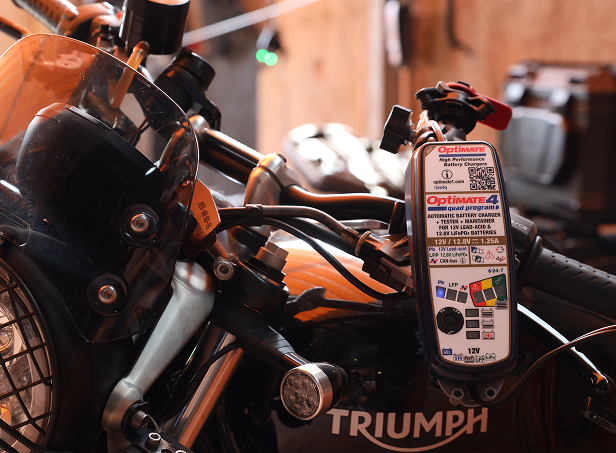
4 Flexible Charge Modes with CAN‑bus Support for BMW
The charger features 4 preset charging programs, allowing users to select the optimal mode based on battery type and connection method:
- Program 1 (Pb): For lead-acid batteries
- Program 2 (Pb + CAN‑bus): Lead-acid charging through DIN/12V port on BMW vehicles with CAN‑bus.
- Program 3 (Lithium): For lithium LFP / LiFePO4 batteries
- Program 4 (Lithium + CAN‑bus): Lithium (LiFePO₄) charging through DIN/12V port on BMW vehicles with CAN‑bus.
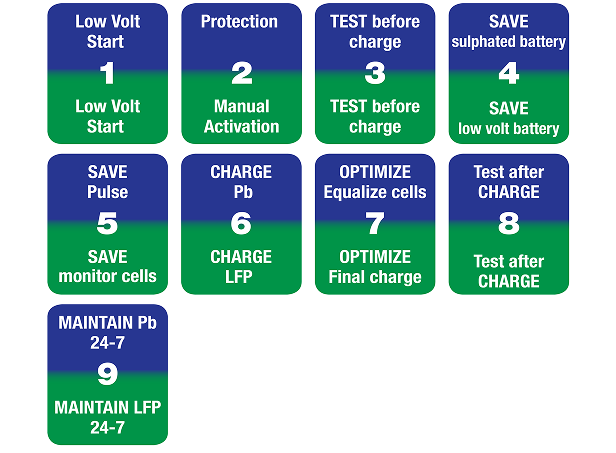
9‑Step Automatic Charging – Optimal Battery Care
OptiMate 4 Quad automatically runs through a 9‑stage cycle, with key phases summarized below:
- Initial Check: Analyzes voltage level and discharge status.
- Desulfation & Low‑Voltage Recovery: Revives sulfated lead‑acid batteries or lithium batteries with locked BMS from as low as 0.5V.
- Main Charge Stage: Delivers a stable 1.25A current to restore battery capacity.
- Health Check: Evaluates self‑discharge rate and displays status via LED indicators.
- Maintenance: Automatically adjusts float current for safe, long‑term connection over months without overcharging or damage.
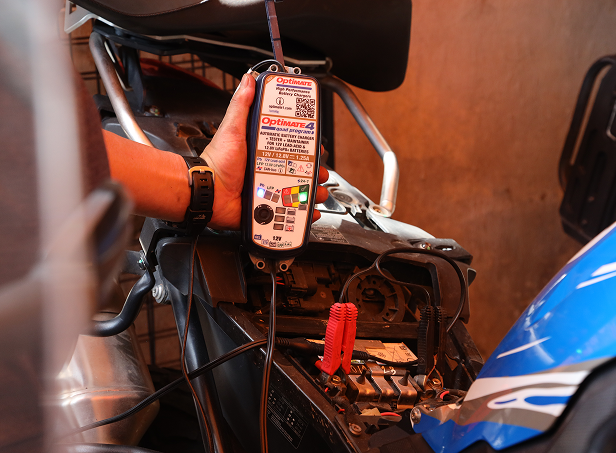
Desulfation & BMS Reactivation – Reviving Weak Batteries
For Lead-Acid Batteries: Prolonged inactivity causes deep discharge and severe sulfation. OptiMate 4 Quad applies safe high‑voltage pulses to break down sulfate crystals, restoring charge acceptance from as low as 0.5V.
For Lithium (LiFePO₄) Batteries: When over‑discharged, the internal BMS (Battery Management System) shuts off protection, making the battery undetectable to ordinary chargers. OptiMate 4 Quad features a special pulse mode that reactivates the BMS, recovering lithium batteries that might otherwise appear dead.
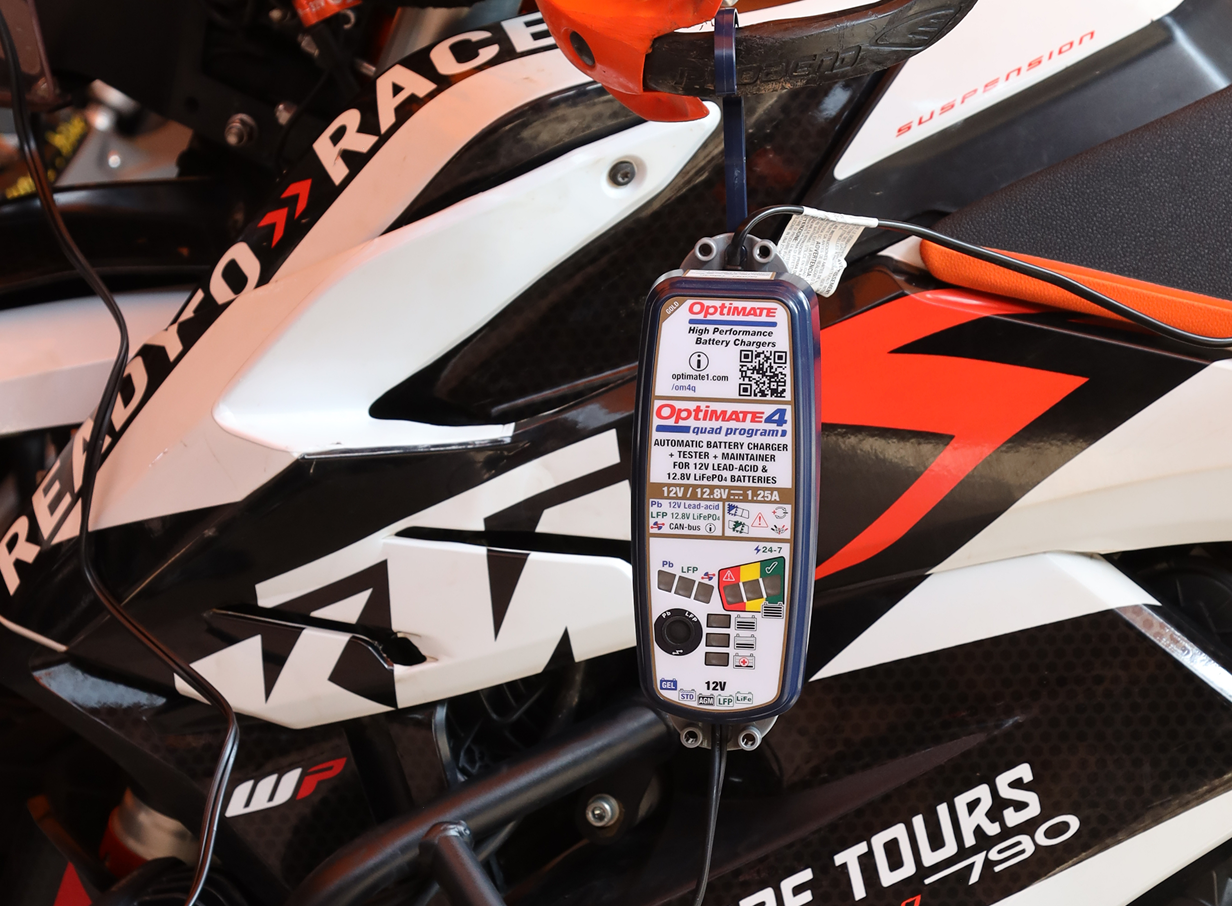
Vehicle‑Safe Design – 24/7 Maintenance Ready
Vehicle Electronics Protection: Spark‑free connection, no overcharging, automatic shutdown on short circuit or disconnection, and reverse‑polarity warning – ensuring complete safety for sensitive sensor circuits on modern vehicles.
Smart Maintenance Mode: Once 100% charge is reached, the unit automatically switches to maintenance mode, compensating for natural self‑discharge without overheating or degrading the battery – enabling safe, continuous connection for extended periods.
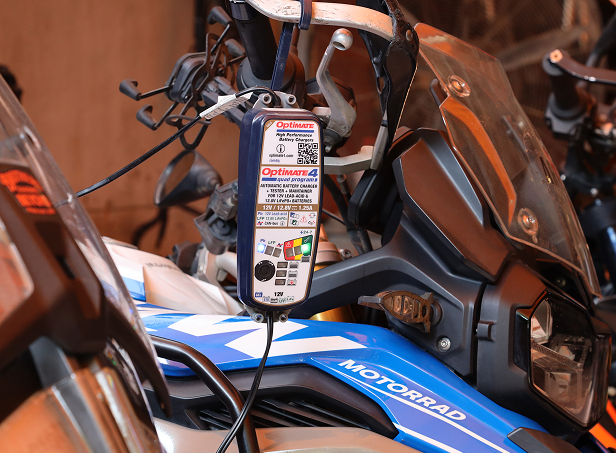
Real‑Time LED Monitoring
OptiMate 4 Quad provides clear visual feedback through its smart LED system, tracking every phase from AC power connection, program selection, recovery of weak batteries, charge progress, to final battery status.
This intuitive display allows you to monitor and verify the process at a glance – no specialized measuring tools or complex operations required.
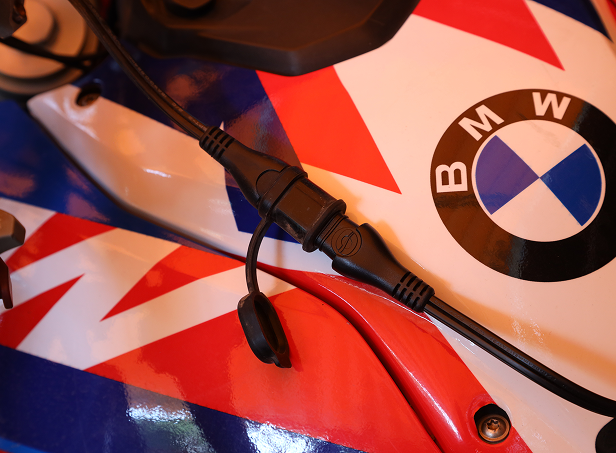
O‑01 Weatherproof Eyelet Lead – Hassle‑Free Connection
The O-01 battery lead features an SAE connector that stays permanently connected to the battery, creating a quick-connect charging point for charging directly on the vehicle. The SAE connector comes with a protective rubber cap to help keep out dust and water when not in use. This means you can connect the charger directly without dealing with complicated connections every time, saving time and making battery charging more convenient.
Frequently Asked Questions
Yes, you can leave it connected for long-term maintenance as long as it is connected properly and the correct program is selected. The OptiMate 4 Quad is designed to automatically switch to maintenance mode after the main charging cycle completes.
Yes, the device features a low-voltage recovery function. When using direct-to-battery connection programs, OptiMate states it can recover batteries with a starting voltage as low as ~0.5V. However, the actual recovery success depends on the overall condition of the battery.
A major reason is that the vehicle's negative cable is still connected to the battery terminal, keeping it linked to the vehicle's electrical system. For maximum recovery power, remove the vehicle's negative cable and connect the charger directly to the battery.
This happens when bike electronics (alarm, GPS, horn, etc.) draw power continuously during charging. You should disconnect the negative terminal or remove the battery entirely to charge it separately.
OptiMate 4 Quad can be used to charge and maintain car batteries as well. However, due to the larger battery size/capacity, it’ll take longer to charge the battery from 0-100%
LED 1a or 1b flashing: Reverse polarity (Red/Black clips swapped). Simply swap the clips; no damage has been done.
LED 8 flashing: OptiMate 4 detects an abnormal charging condition or a problematic Lithium LFP battery. If the battery is connected to the vehicle, disconnect it from the vehicle's electrical system, select the appropriate program, and charge the battery directly. If the LFP battery is not connected to the vehicle, the battery has permanent damage; Do not charge again; Replace the battery.
CAN-bus modes are designed for maintenance only. If the battery is deeply discharged or too weak, the bike's CAN-bus system won't have enough power to activate the DIN socket. In this case, you must attach the clips directly to the battery terminals and select Program 1 (lead-acid) or Program 3 (lithium).
.avif)
.avif)
.avif)
.avif)
.png)