.png)



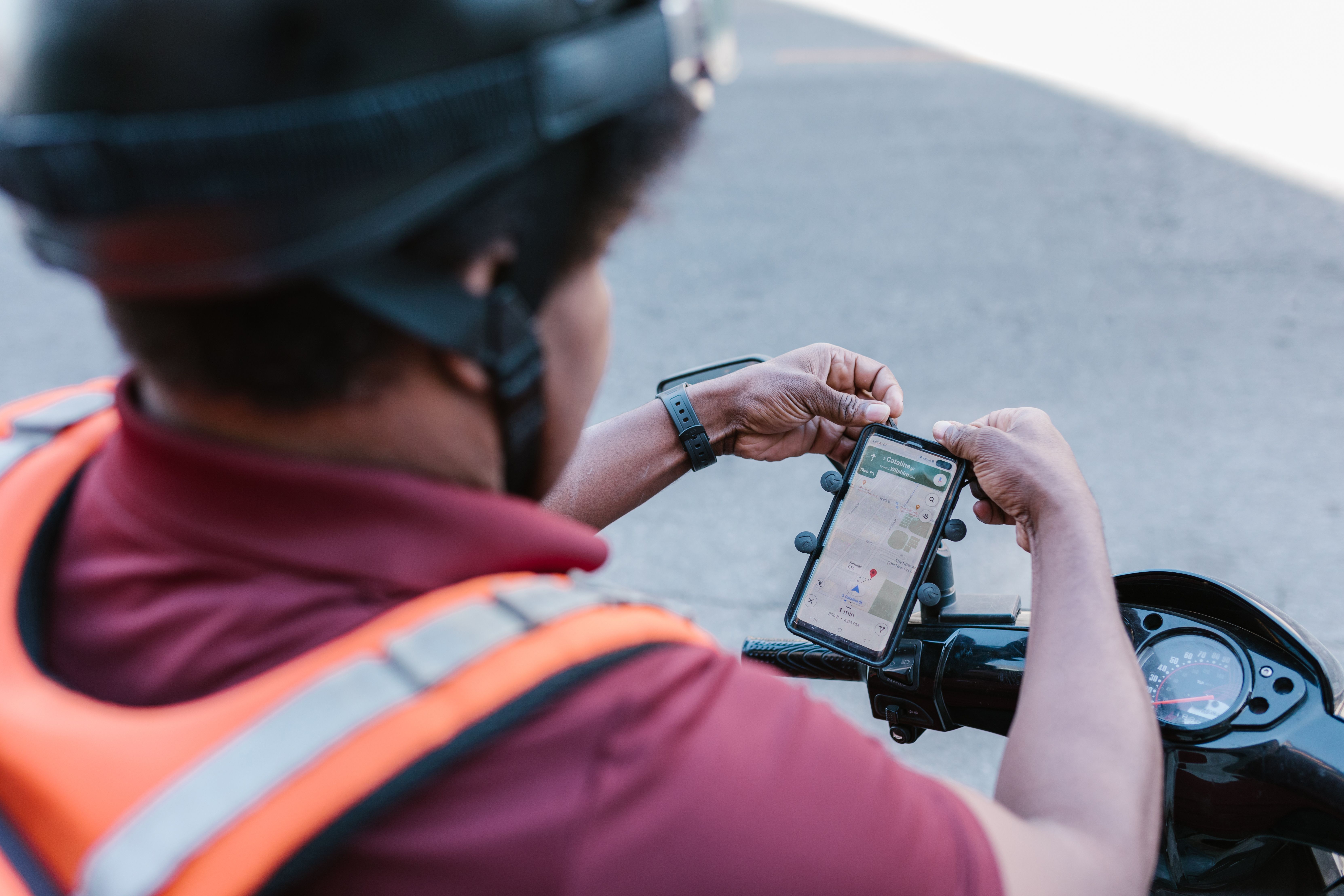
Mounting a Phone on a Motorcycle to Stay Safe and Avoid Legal Violations
Many people still think that mounting a phone on a motorcycle holder is against the law. But in reality, that is not the case.
Under the 2024 Law on Road Traffic Order and Safety, the prohibited act is “holding and using a phone or other electronic device while operating a vehicle in motion on the road.” This means that if the phone is securely mounted on a holder and you only glance at the screen to check the map without using your hands to operate it, you are not violating the law.
But safety is not just about following the law. Mounting your phone on a holder can also help you reduce potential accidents that may harm you and your passengers or someone else on the road.
- No need to stop repeatedly to take your phone out to check directions, navigation, or notifications. Every time you stop unexpectedly on the road, there is a potential risk of being hit by a vehicle from behind.
- Reduce risky situations such as having your phone snatched while holding it in your hand, or dropping and damaging it when it slips from your grip. A phone mounted on a holder stays securely in place, making it much safer than holding it in your hand while riding.
- Reduce the risk of traffic accidents caused by looking down at your phone while riding, which can distract you, reduce your awareness, and affect your ability to react to unexpected situations.
When you need to look at your phone screen, the phone on the holder is also always in an easy-to-see and easy-to-access position. This keeps both hands free to focus on riding and saves time since you don’t have to take your phone out every time you check it.
In short, mounting a phone on a motorcycle is not just about convenience. It is also a way to follow the law, protect yourself and those around you, while keeping your phone safer throughout the journey.

Protect Your Phone with a Vibration-Damping Motorcycle Phone Mount
Now you mount the phone on the handlebar of your motorbike. On the handlebar, the phone may look securely mounted in place. But in reality, it is constantly exposed to vibrations from the engine and road, as well as potholes, speed bumps, and rough sections throughout the ride. Why does this matter?
- The camera can be affected. Long-term exposure to vibration can damage the internal stabilization mechanism called Optical Image Stabilization or OIS. Once OIS is damaged your phone camera cannot focus resulting in blurry images of the phone constantly trying to focus.
- The screen and touch function can become unstable after being exposed to excessive vibration.
And importantly, manufacturer warranties may not cover camera damage if it is caused by using a phone mount without a vibration-damping mechanism. In other words, you could end up paying for a camera repair simply because of a low-quality phone mount.
So what is this vibration-damper? It is a specially designed rubber mount that separates your phone holder to the part where it mounts to the motorbike to reduce the transmission of motorbike vibration to your phone. When you are choosing a phone mount, be sure to look for this feature in order to protect your phone camera. That is why simply securing the phone in place is not enough.
There are a number of vibration-damping motorcycle phone mounts on the market. For the high-end segment, you can look into brands such as Quad Lock and Peak Design, while Kewig is an option in the more affordable segment.
In addition to vibration damping, some phone mounts can also be equipped with a sunshade accessory to protect the phone from direct sunlight and high temperatures, which can affect the device over time.
Charging a Phone on a Motorcycle: Safe for Your Phone, Without Draining the Motorcycle Battery
Once the phone is securely mounted, protected from vibration, and safe from theft, if you take long rides, you may start thinking about how to keep your phone charged throughout the journey.
However, not every charger is suitable for use on a motorcycle.
There are many types of USB-C chargers on the market for motorcycle use. Some phone mounts have built-in wireless charging capability. But not all phones support wireless charging yet all phones support wired charging.
Many USB-C chargers for motorcycles are integrated directly into the phone mount and draw power from the motorcycle’s battery. One thing to consider is whether the charger can safely charge your phone without draining the motorcycle’s battery.
If the USB-C charger lacks proper battery monitoring and protection, it may continue drawing power even when the motorcycle is not running, gradually draining the battery over time. As a result, your phone may be fully charged, but the motorcycle may not start because the battery has run out of power. In addition, a charger that does not properly regulate the charging current may also affect the phone’s battery over time.
Therefore, the quality of the charger used directly on a motorcycle is extremely important. A good charger should have battery protection, monitor battery condition, and regulate the charging current appropriately for each device, providing safe charging for your phone or any other connected device. Not all chargers are the same, and would you trust your smartphone and motorbike with an unknown charger?.
That is also how OptiMate USB O-118 is designed with this in mind. It is more than just a USB-C charger. O-118 is designed to connect directly to the motorcycle battery, while also monitoring voltage and automatically cutting off when the motorbike battery voltage drops too low. This allows your phone to receive the appropriate power while giving you greater peace of mind about the condition of your motorcycle battery.

FAQ
1. Is mounting a phone on a motorcycle illegal in Vietnam?
No, as long as the phone is securely mounted on a holder and you only glance at the screen without using your hands while the bike is moving. Under the 2024 Road Traffic Safety and Order Law, the prohibited act is holding and using a phone with your hands while operating a vehicle — not mounting a phone on a holder. However, if you use your hands to interact with it (swiping, tapping, typing) while riding, you can still be fined.
2. Why should a motorcycle phone mount have vibration protection?
Motorcycles produce continuous vibration from the engine and road surface. A vibration-damping phone mount helps reduce the amount of vibration transferred directly to the phone, particularly to sensitive internal components such as the camera system.
3. Can engine and road vibration damage a phone camera when it is mounted on a motorcycle?
Strong and prolonged vibration may affect certain internal components of a smartphone, particularly the optical image stabilization (OIS) mechanism used in some cameras. That is why it is worth choosing a phone mount with cushioning or a vibration-absorbing mechanism, rather than simply using a rigid mount fixed directly to the handlebars.
4. How can I keep my phone safe when it is mounted on a motorcycle?
Use a phone mount with a secure holding mechanism that is suitable for your phone's size, and check that it is firmly installed before riding. When you stop and leave the motorcycle, it is best to remove your phone and take it with you rather than leave it on the mount.
5. Can I charge my phone directly from a motorcycle?
Yes. A phone can be charged using a charger connected to the motorcycle's electrical system. However, it is important to use a charger designed for motorcycle use and equipped with appropriate battery protection features.
6. Can charging a phone on a motorcycle drain the motorcycle battery?
It depends on the charger, how it is connected, and the condition of the motorcycle battery. A good motorcycle charger should be able to monitor battery voltage and automatically stop drawing power when the battery voltage becomes too low, helping reduce the risk of draining the battery.
7. Should I use a power bank to charge my phone while riding a motorcycle?
A power bank can handle basic charging needs, but for riders who spend many hours on the road, a charger connected directly to the motorcycle can be more convenient. It also eliminates the hassle of running a charging cable from a power bank in your jacket pocket, pants pocket, or backpack to your phone. These cables can easily come loose, get tangled, or get in the way, creating a safety concern while riding.
The important thing is to choose a charger designed to operate in the conditions of a motorcycle.
8. How is the OptiMate USB O-118 different from a standard charger?
The O-118 is designed specifically for motorcycles and connects directly to the motorcycle battery. Its key difference is its battery protection system: it monitors battery voltage and automatically stops drawing power when the input voltage becomes too low, helping reduce the risk of draining the battery and finding that the motorcycle will not start.
The O-118 also features a weather-resistant design and LED indicators that show the battery status.
9. Does the OptiMate O-118 protect the motorcycle battery while charging a phone?
Yes. The O-118 monitors the motorcycle battery voltage and automatically stops drawing power when the input voltage falls below the appropriate threshold. This helps prevent continued power consumption from an already weak battery.
10. What devices can the OptiMate O-118 charge?
The O-118 provides 16W / 3300mA USB-C output and can power devices such as smartphones, GPS devices, action cameras, and other compatible USB-C devices.
JJDistribution – Nhà phân phối chính thức OptiMate tại Việt Nam
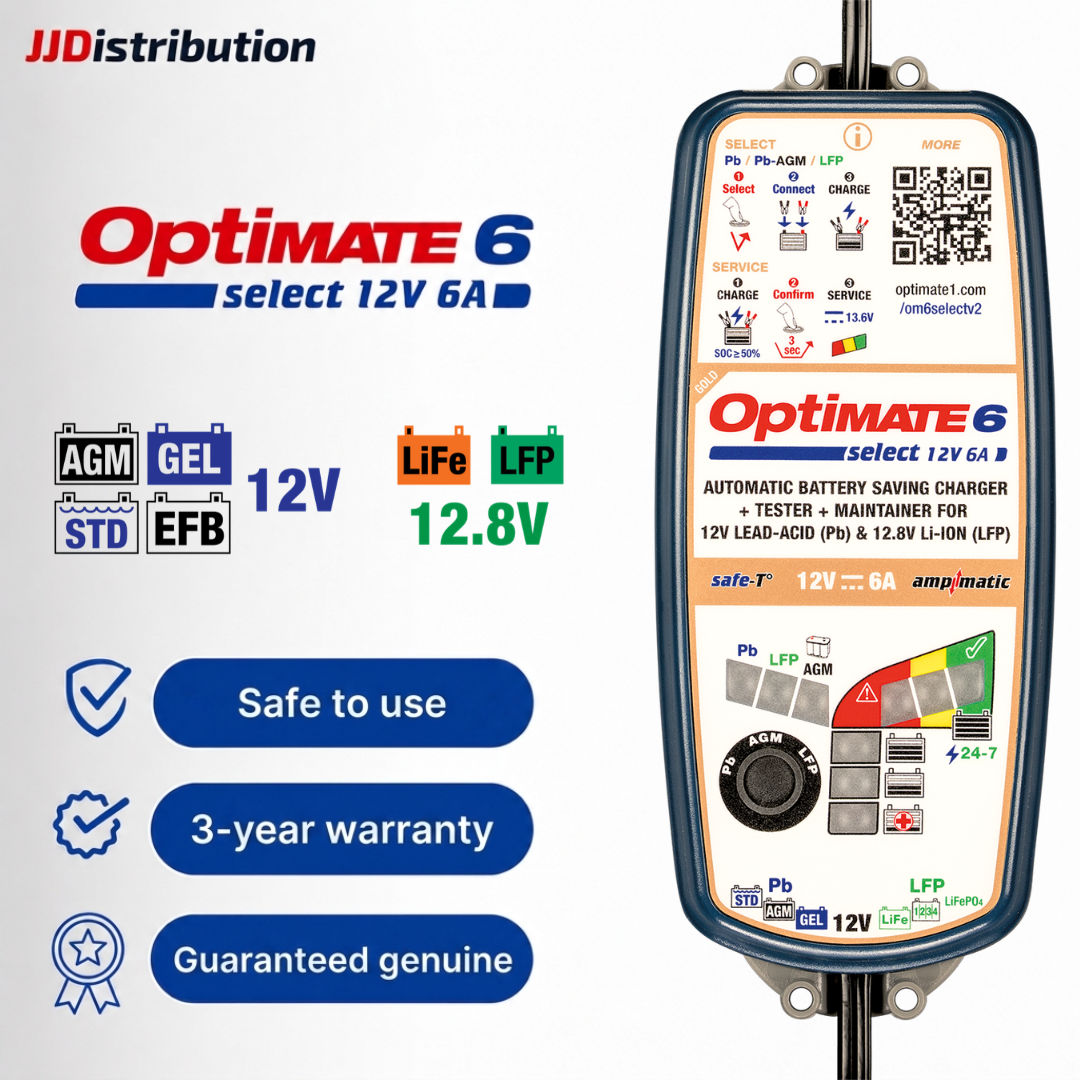
- OptiMate 1 Duo: nhỏ gọn, dễ sử dụng, lý tưởng cho xe tay ga và xe số.
- OptiMate 2 Duo: mạnh mẽ hơn và sạc nhanh hơn, phù hợp cho xe máy, mô tô và ô tô
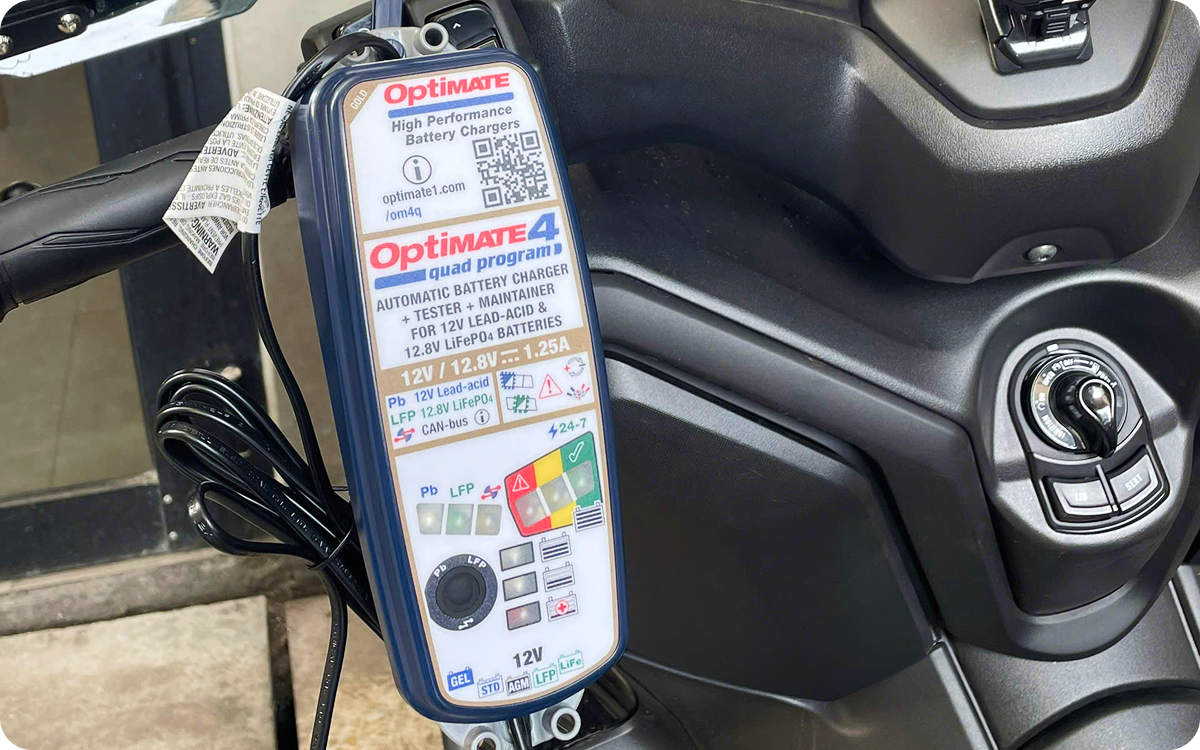
- OptiMate 4 Quad: dòng cao cấp nhất, hỗ trợ sạc qua cổng CAN-bus của các dòng xe như BMW, Triumph, Ducati, đồng thời tích hợp chức năng khử sunfat và hồi phục bình yếu, giúp kéo dài tuổi thọ bình ắc quy và tối ưu hiệu suất sạc
👉 Liên hệ JJDistribution để được tư vấn dòng sạc bình ắc quy phù hợp nhất cho xe của bạn.
Xem chi tiết các mẫu sạc OptiMate tại đây.
.avif)
.avif)
.avif)
.png)