
Quick Reference Guide for a Dead Car Battery
Note: Never attempt to push-start an automatic transmission vehicle, as this can severely damage the gearbox (only consider push-starting a manual transmission vehicle as a last resort).
To prevent unexpected battery drain: Watch for early signs like slow engine cranking or dim lights; turn off all electronics before leaving the car; clean the battery terminals periodically; and use a maintenance charger equipped with a battery health test function.
SIGNS YOUR CAR BATTERY IS DEAD
First, observe your vehicle's symptoms to rule out other issues such as an empty fuel tank or a faulty ignition system. When a 12V battery is depleted, you will typically notice the following signs:
- Weak cranking or failure to start: When you turn the key or press the Start/Stop button, you only hear a rapid clicking sound from the engine bay, and the engine does not turn over.
- Dim or weak electrical systems: Headlights and interior dome lights are noticeably dim, the horn sounds weak or silent, and power windows move very slowly.
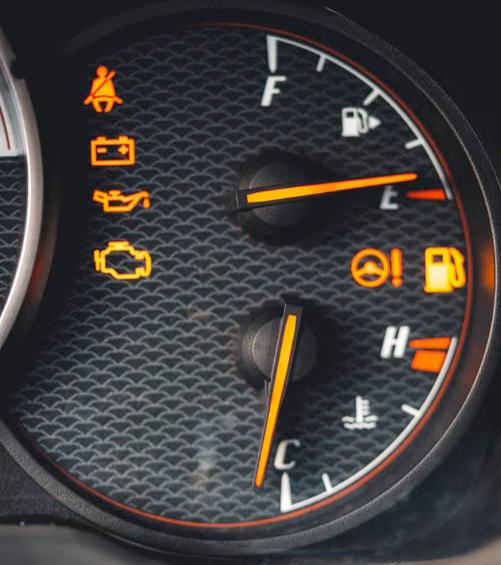
- Dashboard warning signs: The instrument cluster remains dark, displays multiple error warnings, or illuminates the red battery icon (note: if this icon lights up while the engine is running, the issue usually lies with the charging system/alternator rather than just a dead battery).
- Unresponsive smart key: You cannot lock or unlock the doors remotely using your key fob, even though the fob's own battery is still good.
4 WAYS TO HANDLE A DEAD CAR BATTERY
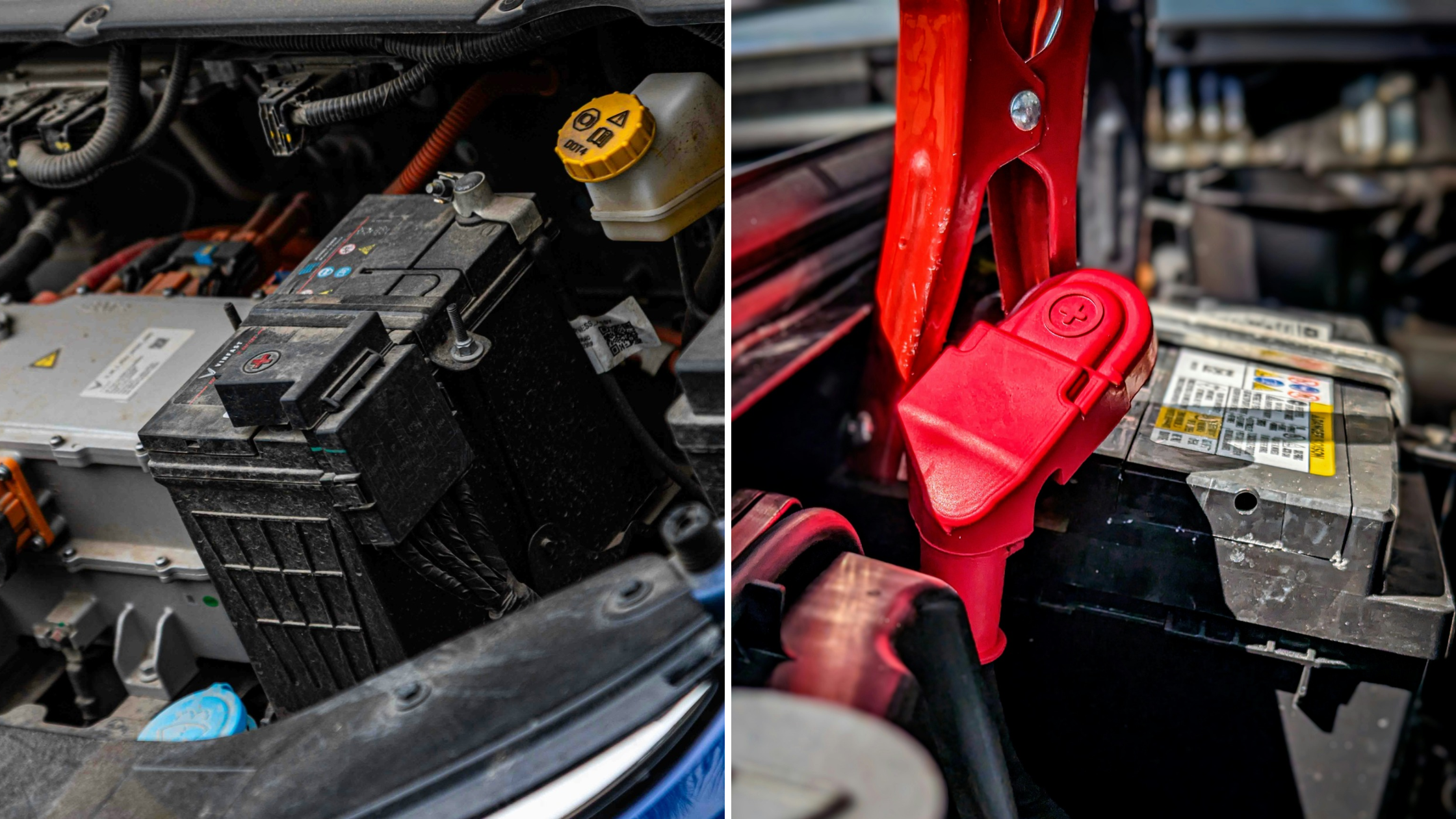
IOn certain vehicles where the battery is located in the trunk or under a seat, manufacturers provide dedicated jump-start terminals (+ / -) under the hood. Always check your owner's manual to locate the correct connection points before proceeding.
Method 1: Recharge with a Smart Battery Charger
If your car is parked at home or in a garage, you are not in a rush to leave, and the battery has only drained temporarily (from leaving the lights on or letting the car sit unused) with its casing still intact, you can safely recharge it yourself.
To use a charger, simply connect the red clamp to the positive (+) terminal and the black clamp to the negative (-) terminal first, then plug the charger into a power outlet. For step-by-step instructions, see our guide on How to Safely Charge a Car Battery at Home Without Going to a Shop.
A smart battery charger restores the battery's true capacity and preserves its lifespan better than simply idling the engine to charge via the alternator. Proper maintenance charging also extends the battery's service life and reduces the need for frequent replacements.
Method 2: Quick Start Using a Portable Jump Starter
A portable jump starter is ideal when you are stranded alone on the road and have a charged lithium jump pack compatible with your vehicle's voltage.
Step 1: Turn off all electrical loads. Switch off the ignition, headlights, and all electronic accessories, then engage the parking brake.
Step 2: Connect the clamps to the battery. Attach the red clamp to the positive (+) terminal, and attach the black clamp to the negative (-) terminal or an unpainted metal grounding point on the chassis. Next, plug the cable connector firmly into the jump starter unit.
Step 3: Start the vehicle. Power on the jump starter, wait for the ready indicator light, and start your engine from inside the cabin.
Step 4: Disconnect in the proper order. Once the engine is running smoothly, unplug the cable connector from the jump starter unit first, then remove the black (-) clamp, and finally remove the red (+) clamp. This immediately cuts off power and prevents the clamps from accidentally touching each other.
Method 3: Jump-Start from Another Vehicle
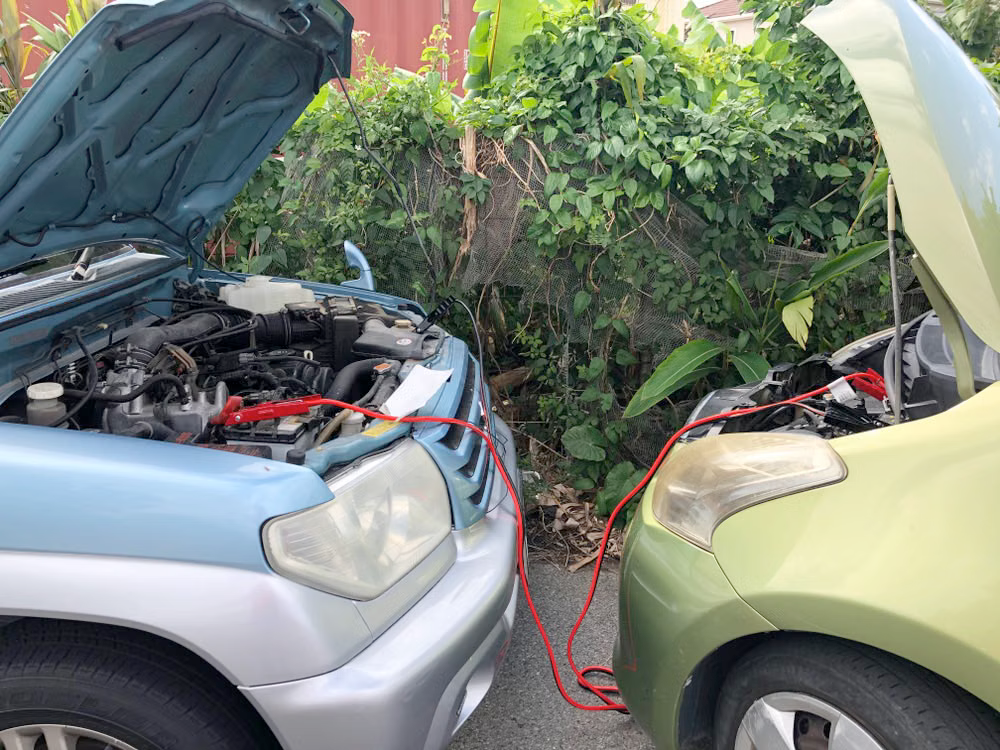
If another driver is willing to help, you can use heavy-duty copper jumper cables (ideally at least 2.5m / 8ft long) to draw power from their battery and start your engine.
Before starting, ensure both vehicles share the same electrical system voltage (typically 12V for passenger cars). Never use a hybrid or electric vehicle (EV) as a donor vehicle unless explicitly permitted by its manufacturer.
Step 1: Position the vehicles and turn off electronics. Park the cars close enough for the cables to reach, ensuring their bodies do not touch. Turn off the engines, switch off all electrical accessories, and engage the parking brakes on both vehicles.
Step 2: Connect the positive (+) cable. Attach one red clamp to the positive (+) terminal of the dead battery, and connect the other red clamp to the positive (+) terminal of the donor vehicle's battery.
Step 3: Connect the negative (-) cable. Attach one black clamp to the negative (-) terminal of the donor battery. Connect the other black clamp to an unpainted, clean metal surface (free of grease or oil) inside the engine bay of the dead vehicle. Grounding to the chassis rather than directly to the dead battery's negative terminal minimizes the risk of sparks near battery gases.
Step 4: Start the engines. Double-check that the cables are clear of moving parts like cooling fans or drive belts. Start the donor vehicle and let it idle for 3–5 minutes to stabilize the current, then crank the engine of the disabled vehicle.
Step 5: Remove the jumper cables. Once your car starts, disconnect the clamps in reverse order without letting them touch each other or any metal surfaces: black clamp on the jump-started car black clamp on the donor car red clamp on the donor car red clamp on the jump-started car.
Method 4: Call Roadside Assistance or a Mobile Battery Service
You should contact roadside assistance or a mobile technician in any of the following scenarios:
- You do not have a jump starter, jumper cables, or another vehicle nearby to assist.
- You notice physical damage on the battery, such as a swollen or cracked casing, leaking acid, an unusual burning smell, or heavy white/greenish corrosion buildup around the terminals.
- You have tried jump-starting the vehicle, but the engine still fails to start.
A technician will test the battery's cold cranking amps and the vehicle's charging system, recommending a replacement if the battery can no longer hold a charge.
WHAT TO DO IMMEDIATELY AFTER STARTING YOUR CAR
Once you successfully jump-start your vehicle, do not turn the engine off right away. Let the car idle or drive continuously for 20–30 minutes (with the air conditioning and infotainment screen turned down) so the alternator can replenish a portion of the lost charge. Once you return home and shut off the engine, connect a smart charger with a recovery mode to fully restore the battery's capacity and stabilize its charge retention.
HOW TO PREVENT YOUR CAR BATTERY FROM DYING UNEXPECTEDLY
To avoid getting stranded on the road due to a dead battery, you can proactively prevent the issue with a few simple habits:
- Pay attention to early warning signs: If you notice slow engine cranking, dim headlights, or a weak horn, check and recharge your battery early before it fails completely.
- Check vehicle electronics before leaving: Make sure headlights, interior dome lights, and accessories plugged into the 12V socket are completely turned off before locking the doors.
- Inspect and clean battery terminals periodically: Open the hood to check the battery casing for damage and clean away any white or greenish corrosion buildup around the terminals to ensure a stable electrical connection.
- Use a maintenance charger when driving infrequently: If your car sits unused for extended periods or is mostly driven on short trips, proactively connect an automatic maintenance charger to keep the battery topped up. Some smart chargers also feature a battery health test function, helping you detect early signs of weakening so you can replace the battery in time before experiencing a roadside breakdown.
FREQUENTLY ASKED QUESTIONS (FAQ)
1. Can a dead car battery be recharged?
Yes, a dead car battery can be recharged if it only drained temporarily (such as leaving the lights on or letting the car sit unused) and the casing remains intact without swelling or leaking. You can use a smart battery charger to fully recharge it and test its ability to hold a charge; if it fails to accept a charge or loses voltage rapidly afterward, it should be replaced.
2. Should I recharge or replace a dead car battery?
This decision depends primarily on the battery's actual ability to hold a charge rather than its age in years. If the casing is intact, the battery only drained from accidentally leaving lights on or sitting idle, and it holds power steadily after a full charge, you can recharge and continue using it. Conversely, if the battery is swollen, leaking fluid, or loses voltage rapidly within 1–2 days of a full charge, you should replace it to ensure safe operation. (Read more: Dead Car Battery: Should You Recharge or Replace It?)
3. What are the warning signs of a dying or dead car battery?
Common warning signs include slow engine cranking, a rapid clicking sound when turning the key or pressing the start button without the engine starting, dim headlights and interior lights, a weak horn, or a red battery warning light on the dashboard. (Note: If the battery warning light comes on while driving, it usually points to a charging system issue rather than just a weak battery).

JJDistribution – Official OptiMate Battery Charger Distributor in Vietnam
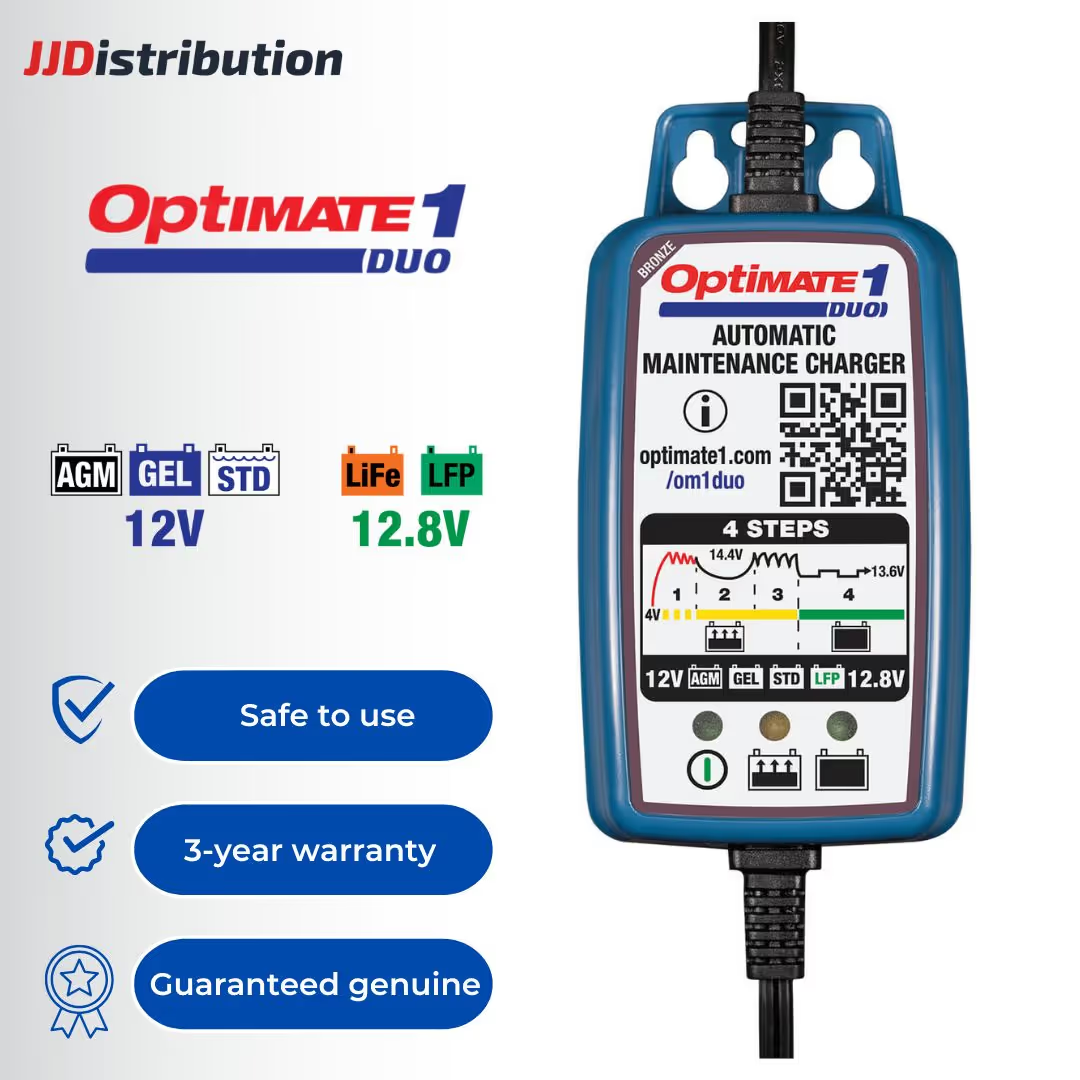
- OptiMate 1 DUO: Compact and easy to operate, ideal for scooters, standard motorcycles, and big bikes.
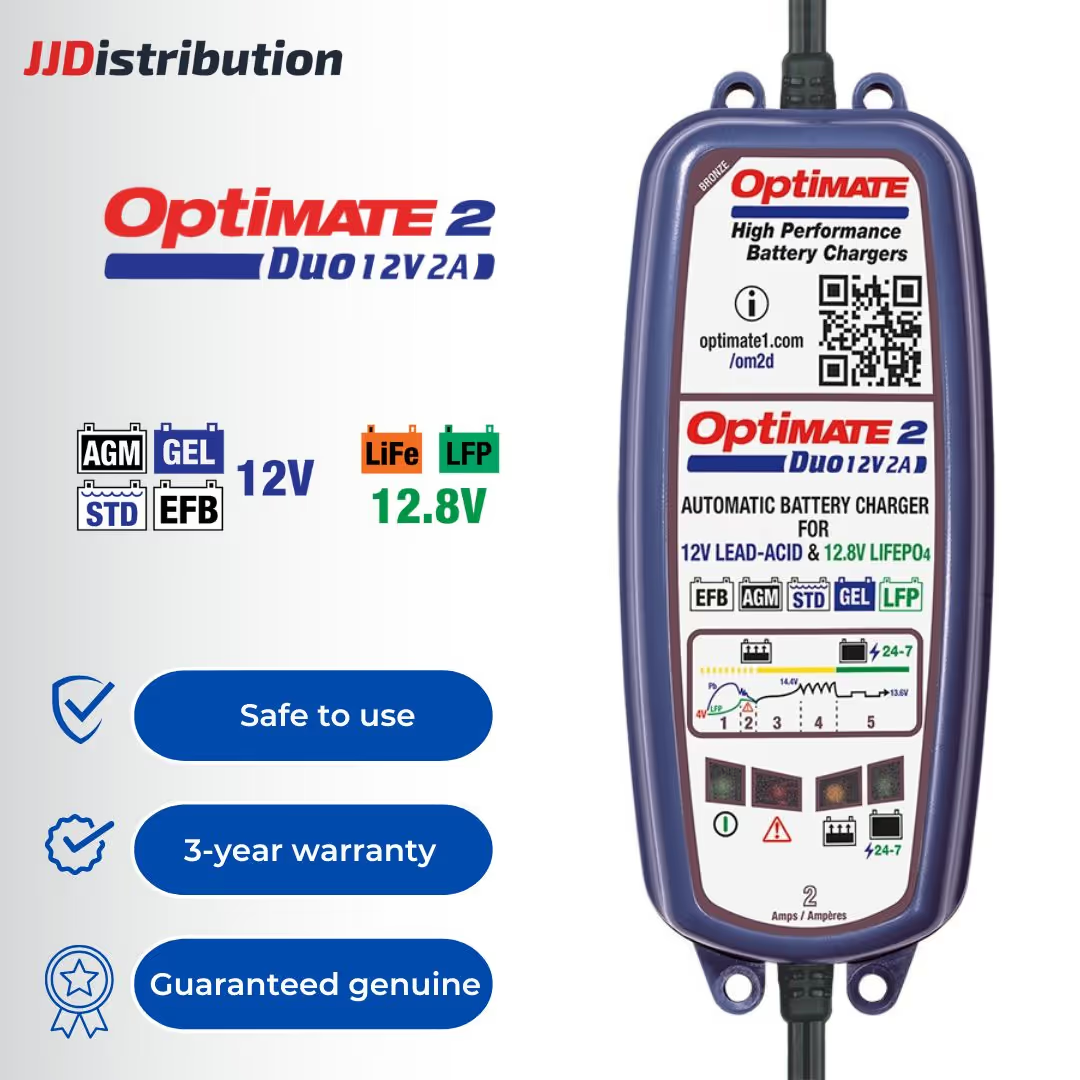
- OptiMate 2 DUO: A more powerful charging solution, recommended for automobiles and Grand Touring, Full-Dress Tourer motorcycles,... with larger battery capacity.
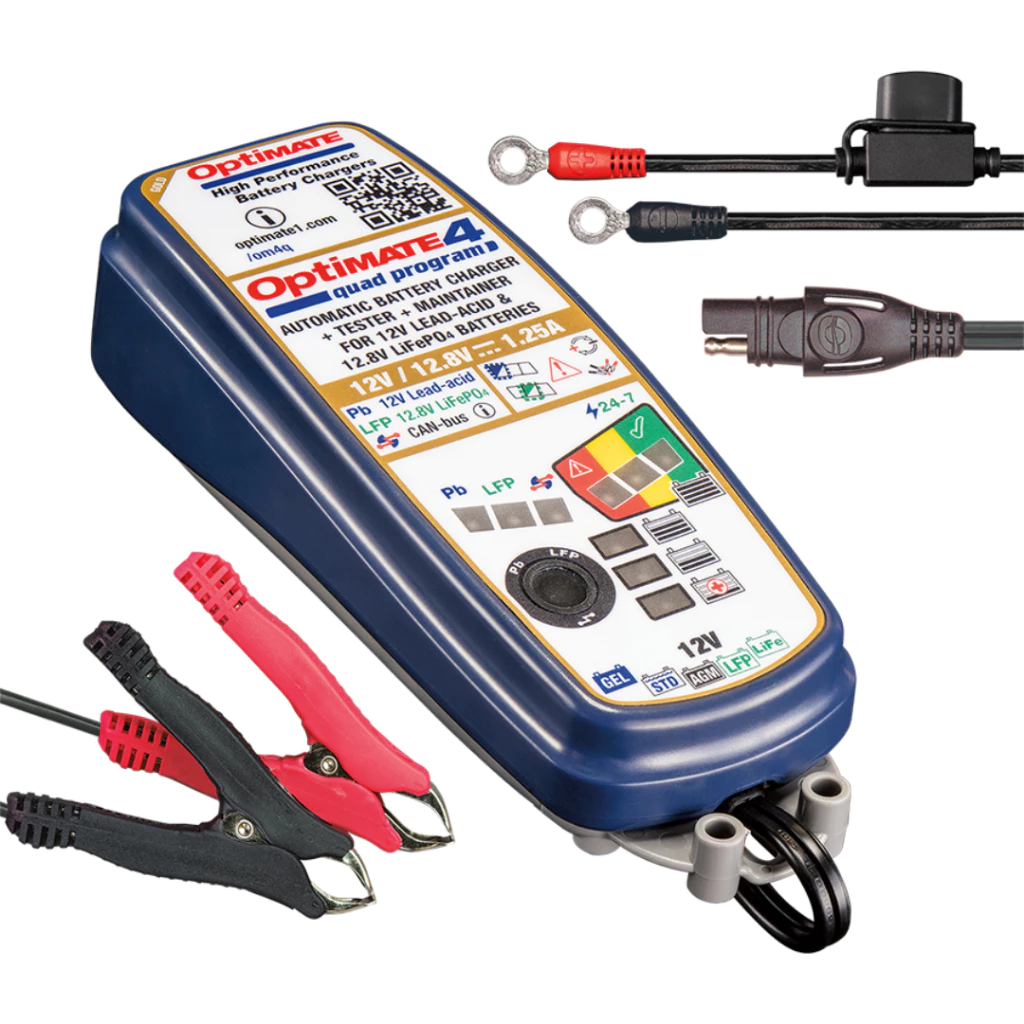
- OptiMate 4 Quad: A more powerful charging solution, recommended for automobiles and Grand Touring, Full-Dress Tourer motorcycles,... with larger battery capacity.
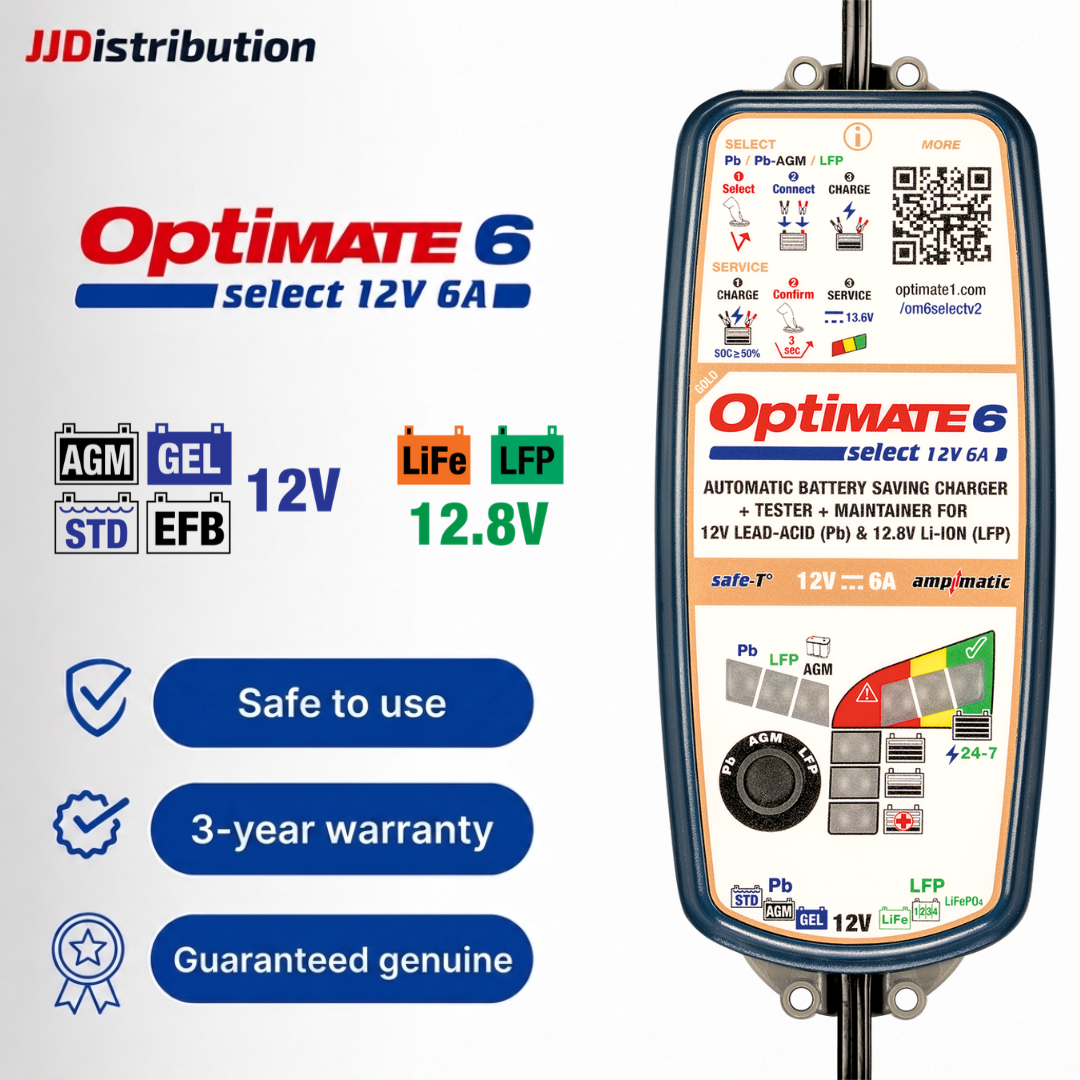
- OptiMate 6 Select (v2): A premium charger with adjustable charging current, suitable for motorcycles, scooters, large-displacement motorcycles, automobiles, trucks, racing vehicles, and more. Supports desulfation and weak battery recovery. The SERVICE mode provides stable power supply during diagnostics, maintenance, ECU updates, or for maintaining power in showroom display vehicles.
View detailed OptiMate charger models here