Key Takeaways:
- Independent Roles: Electric vehicles—including VinFast models such as VF 3, VF 5, VF e34, VF 8, and VF 9—rely on a 12V auxiliary battery to power the dashboard screen, doorlocks, and activate the safety switch that unlocks the main traction battery upon startup.
- Unresponsive Vehicle Issue: When the 12V battery is depleted, the safety switch cannot engage. The main high-voltage pack remains isolated, preventing the vehicle from unlocking or starting even if the traction battery is at 100%.
- Common Culprits: Misconceptions about automatic recharging, parasitic draw from aftermarket dashcams and accessories, extended parking periods, or frequent short trips.
- Maintenance Solution: Regularly monitor 12V battery voltage and use a smart battery maintainer and safe float charging to keep the battery in optimal condition.
1. THE PARADOX: MAIN BATTERY AT 100%, YET THE EV WILL NOT START
Many electric vehicle drivers encounter a perplexing issue: after leaving the car parked over a long weekend or extended holiday, the smart key fails to unlock the doors, the central screens remain black, and the vehicle refuses to power on. Yet, the mobile companion app previously indicated that the main battery pack was sitting at 90% to 100%.
The root cause does not lie within the high-voltage traction battery pack, but rather with a smaller, often overlooked component: the 12V auxiliary battery. When the 12V battery is completely discharged, the primary control electronics cannot wake up, leaving the high-voltage battery pack isolated from the rest of the car.
2. WHY DO ELECTRIC VEHICLES STILL REQUIRE A 12V BATTERY?
In modern EV electrical architecture, high-voltage battery systems and low-voltage auxiliary batteries handle fundamentally different tasks:
Maintaining an independent 12V battery stems from two vital operational and safety principles:
1. Activating System Startup and Ensuring Electrical Safety
Under automotive safety regulations, high-voltage traction batteries must be physically isolated from the chassis whenever the vehicle is switched off or in the event of a collision. This isolation prevents electrical leakage, fire hazards, and high-voltage exposure.
To reconnect the main battery pack when the driver starts the car, the system requires an independent power source to send the signal that closes the primary contactor switches. The 12V auxiliary battery is the sole power supply tasked with this duty. If the 12V battery is depleted:
- The main circuit switches cannot close.
- The high-voltage traction pack remains locked in a fail-safe state.
- The vehicle cannot start or drive, regardless of the traction battery's charge level.
2. Powering Standby Electronics Efficiently
Modern EVs run continuous background processes while parked: telematics modules (4G/LTE/5G), keyless entry transceivers, GPS tracking, and anti-theft alarms.
The 12V battery powers these essential low-voltage systems efficiently. Activating a massive 400V–800V battery pack merely to run minor background sensors would cause unnecessary parasitic drain, reducing overall efficiency and battery lifespan.
3. COMMON HABITS THAT WEAKEN AN EV'S 12V BATTERY
Unlike internal combustion vehicles that recharge auxiliary batteries using an engine-driven alternator, EVs use a DC-DC Converter to step down power from the traction pack to the 12V battery. Even with this system, 12V batteries often degrade due to three main factors:
3.1. Misconceptions About Automatic Recharging
The onboard DC-DC converter actively charges the 12V battery while the vehicle is driving (Ready mode) or plugged into an EV charger. However, when an EV is parked for long periods and enters deep sleep mode, automatic top-ups may pause or run only intermittently depending on the vehicle's firmware logic.
3.2. Parasitic Drain from Aftermarket Accessories
EVs continuously consume a tiny standby current. Installing uncertified aftermarket accessories—such as hardwired dashcams running 24/7 parking surveillance or continuous GPS loggers—dramatically increases parasitic drain, depleting the 12V battery when parked over several days.
3.3. Frequent Short Trips
Taking only brief trips (5 to 10 minutes) does not provide the DC-DC converter sufficient operating time to replenish the energy consumed during vehicle wake-up, boot sequences, and initial cabin accessory loads.
4. WARNING SIGNS OF A DETERIORATING 12V BATTERY
Before an auxiliary battery drops below the operational threshold required to close high-voltage contactors, several early warnings usually appear:
- Delayed Keyless Entry: Noticeable lag when unlocking via proximity sensing or smart key fob buttons.
- Display Anomalies: Central infotainment or digital instrument clusters take longer to boot, flicker, or show reduced brightness.
- Spurious Warning Codes: False notifications on the dashboard regarding Advanced Driver Assistance Systems (ADAS), parking sensors, or low-voltage electrical alerts.
- Dim Lighting: Interior courtesy lights or daytime running lights (DRLs) appear dimmer prior to switching the vehicle into Ready mode.
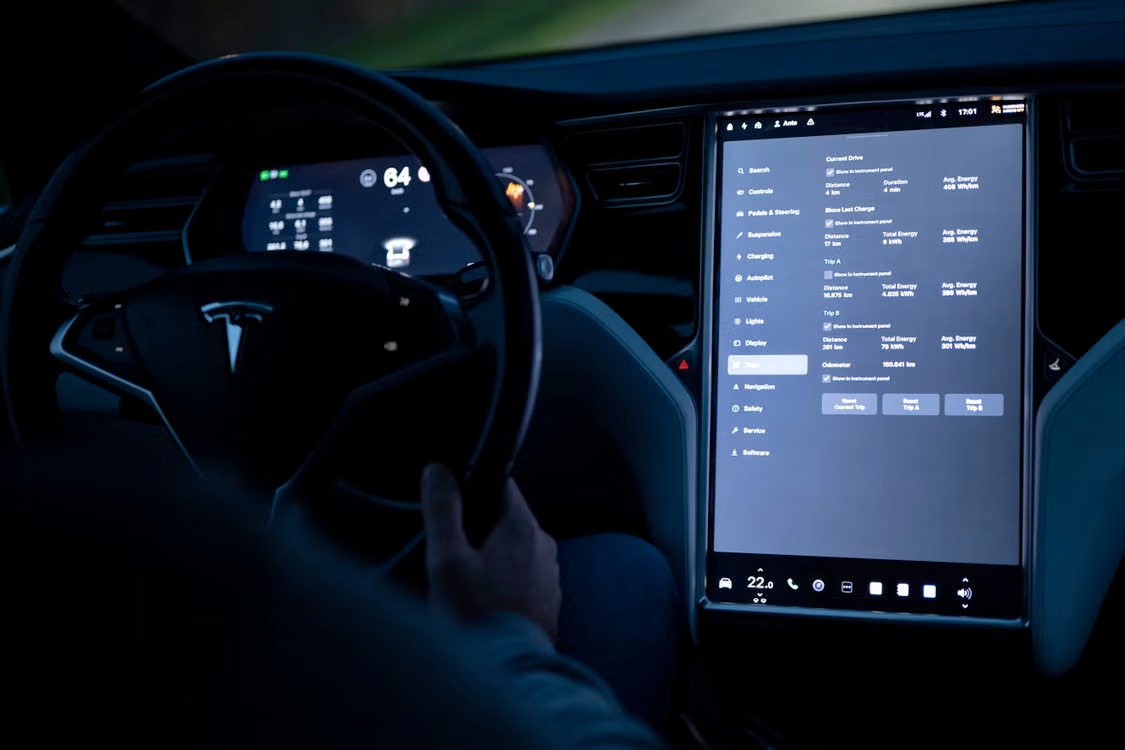
5. PROACTIVE MAINTENANCE: SMART 12V CARE AT HOME
To protect sensitive electronic control units (ECUs) and extend the service life of an EV's 12V battery, proactive maintenance charging is both practical and cost-effective.
A smart maintenance charger is superior to basic chargers. Rather than supplying an uncontrolled current that risks overheating battery plates, a microprocessor-controlled unit continuously monitors battery health, regulates charging profiles, and transitions into a maintenance float mode once full charge is achieved. It delivers minimal compensatory pulses only when natural voltage decay is detected, making extended multi-week connections completely safe.
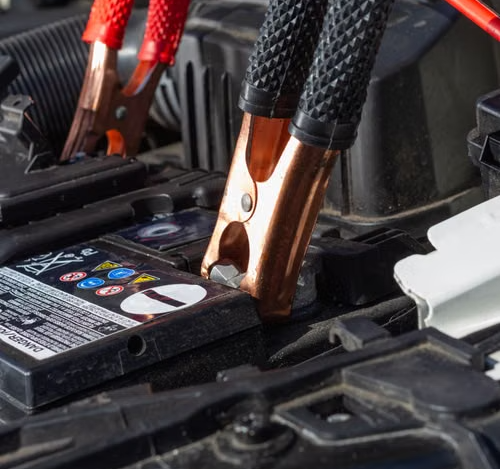
6. RELIABLE 12V BATTERY MAINTENANCE PARTNER
The OptiMate 2 Duo (2A charging current), is an automated smart charger and maintainer engineered for modern 12V auxiliary vehicle batteries:
- Broad Compatibility: Works seamlessly across all 12V lead-acid technologies (AGM, EFB, GEL, Standard) as well as 12V Lithium Iron Phosphate (LiFePO4) batteries.
- Fully Automated Operation: Automatically diagnoses battery state and optimizes the charging-maintenance cycle without requiring manual setting configurations.
- Safe for Vehicle Electronics: Equipped with comprehensive protections against short circuits, reverse polarity, and sparking. It can be connected directly to the battery terminals on VinFast and other EV models without disconnecting the battery cables or risking sensitive vehicle sensors.

FAQ
1. The main battery is fully charged, but the car won't open. What could be the reason?
One possible reason is that the 12V battery is weak or discharged. Having plenty of energy remaining in the main battery does not mean that the 12V battery is also in good condition.
2. Does an EV automatically charge its 12V battery?
Yes. EVs typically use a DC-DC converter to support charging the 12V battery from the high-voltage system. However, this process does not occur continuously in every vehicle state, and it also cannot prevent the battery from aging.
3. Can parking an EV for a long time or using it infrequently weaken the 12V battery?
It can. Some electrical systems continue to consume energy while the vehicle is parked, so the 12V battery can still lose charge over time. If the vehicle is frequently parked for long periods, checking and maintaining the battery is important.
4. Should you use a charger to maintain an EV's 12V battery?
Yes, especially when the vehicle is frequently parked for long periods or rarely used. However, it is important to choose a smart charger suitable for the battery type, with the ability to monitor and adjust the charging process rather than continuously supplying a fixed current.
5. Is the OptiMate 2 Duo suitable for maintaining a 12V battery in an electric car?
The OptiMate 2 Duo provides a 2A charging current and is designed to charge and maintain compatible battery types. For an EV, check the 12V battery type and the requirements of the specific vehicle model before choosing a charger.

JJDistribution – Official OptiMate Battery Charger Distributor in Vietnam
- OptiMate 1 DUO: Compact and easy to operate, ideal for scooters, standard motorcycles, and big bikes.
- OptiMate 2 DUO: A more powerful charging solution, recommended for automobiles and Grand Touring, Full-Dress Tourer motorcycles,... with larger battery capacity.
- OptiMate 4 Quad: A more powerful charging solution, recommended for automobiles and Grand Touring, Full-Dress Tourer motorcycles,... with larger battery capacity.
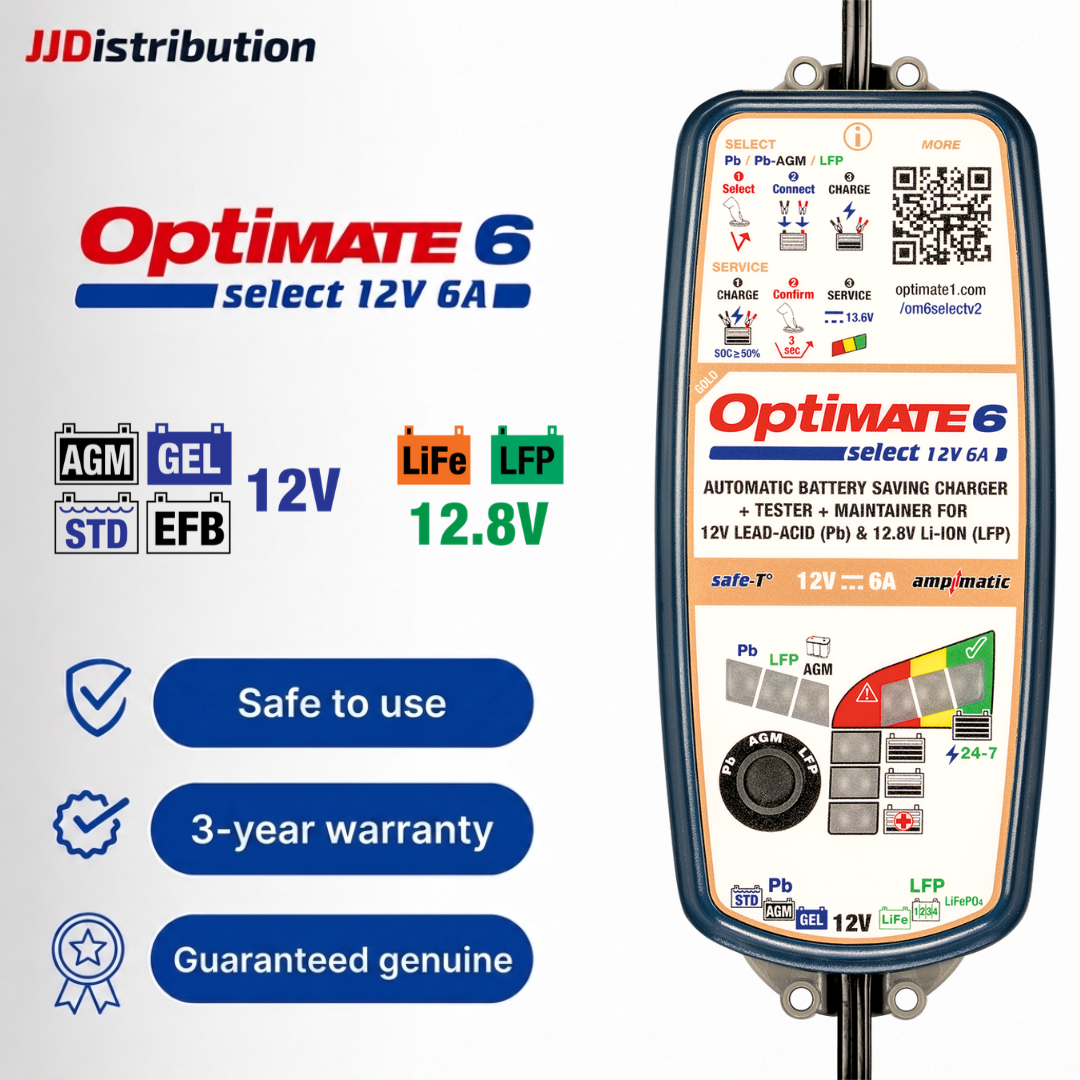
- OptiMate 6 Select (v2): A premium charger with adjustable charging current, suitable for motorcycles, scooters, large-displacement motorcycles, automobiles, trucks, racing vehicles, and more. Supports desulfation and weak battery recovery. The SERVICE mode provides stable power supply during diagnostics, maintenance, ECU updates, or for maintaining power in showroom display vehicles.
View detailed OptiMate charger models here